

Explore Our Memberships
From in-depth courses to exclusive content, these resources are made to move with you—and move you forward.
What You’ll Learn
By the end of Behind the Checklist, participants will be better equipped to:
Assess Beyond the Screening Tool — Integrate standardized measures with clinical interviewing, observation, history, collateral information, and professional judgment.
Differentiate Levels of Suicide Risk — Evaluate passive and active suicidal ideation, intent, planning, access to means, preparatory behaviors, lethality, and protective factors.
Conduct Homicide & Violence Risk Assessment — Explore threats, intent, identified targets, access to means, history of violence, escalating behaviors, and other indicators requiring further intervention.
Recognize What Clients May Not Say — Identify inconsistencies, minimization, guarded responses, behavioral changes, and subtle indicators that warrant deeper assessment.
Ask the Questions That Matter — Develop greater confidence conducting direct, compassionate conversations about suicide, homicide, intent, planning, and access to lethal means.
Identify Acute vs. Chronic Risk — Understand how baseline vulnerabilities and rapidly changing circumstances influence clinical decision-making.
Strengthen Clinical Judgment — Move beyond a simple “low, moderate, high” designation to develop a meaningful formulation of the individual’s overall risk.
Create Effective Safety Plans — Develop individualized, actionable safety plans based on the person’s actual risks, resources, supports, and circumstances.
Know When to Escalate Care — Recognize when outpatient management may be appropriate and when additional evaluation, consultation, emergency intervention, or a higher level of care should be considered.
Document the Clinical Decision-Making Process — Clearly capture assessment findings, rationale, interventions, consultations, safety planning, and disposition.
Navigate Complex & High-Risk Scenarios — Apply advanced assessment principles to realistic cases where the answer is not immediately obvious.
The Goal
To help clinicians move from “I completed the assessment” to “I understand the risk, can explain my clinical reasoning, and know what needs to happen next.”

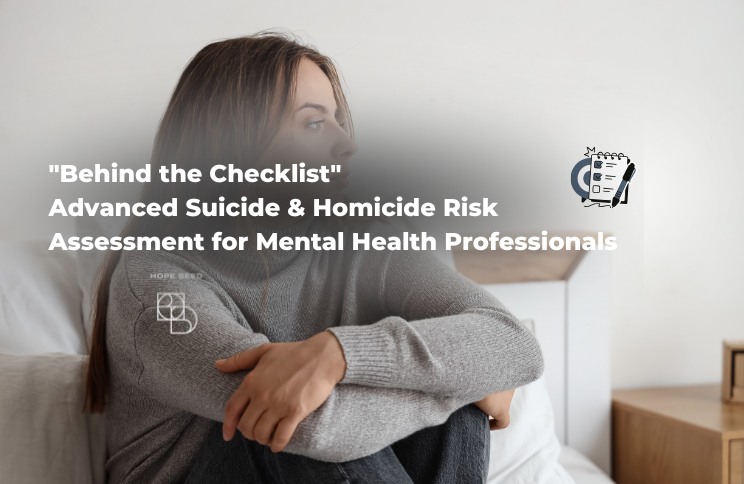
Course 01Behind the Checklist
Advanced Suicide & Homicide Risk Assessment for Mental Health Professionals
At Hope Seed, we believe mental health professionals deserve the knowledge, confidence, and clinical skills to respond when the stakes are highest. Suicide and homicide risk assessment cannot simply be a checklist-it requires discernment, preparation, and skilled clinical judgment. In moments of potential crisis, there may be only one opportunity to recognize the risk, intervene effectively, and help protect a life.
We want professionals prepared for that moment.

Course 02Coming Soon
Learn tools for organizing ideas, setting goals, and building consistent schedules. From brainstorming to publishing, this course helps turn scattered thoughts into a cohesive plan.

Course 03Coming Soon
Discover how to analyze workflows, identify inefficiencies, and implement smarter systems. This course helps you create processes that actually work, for a team or just for yourself.
From Our Clients“The mix of video, written content, and downloadable resources makes everything feel accessible and well-rounded.”

Meet Your Instructors


-
Founder
It all begins with an idea. Maybe you want to launch a business. Maybe you want to turn a hobby into something more.
-
Design Director
It all begins with an idea. Maybe you want to launch a business. Maybe you want to turn a hobby into something more.
-
Sustainability Director
It all begins with an idea. Maybe you want to launch a business. Maybe you want to turn a hobby into something more.
Available Plans
Your Questions, Answered-
Membership typically includes access to our full library of digital content—videos, courses, resources, and any new material we release while you're subscribed.
-
Definitely. You can switch plans, upgrade, or make changes to your membership anytime.
-
Yes! We’re always expanding the library with fresh content, tools, and updates to keep your learning and inspiration going strong.
-
Memberships are flexible and can be canceled at any time from your account. You’ll retain access through the end of your current billing cycle.